
What Starbucks' Pumpkin Spice Latte Launch Teaches Founders About Scalable Operations
Every August, Starbucks executes one of the most flawless seasonal launches in business. It's not magic — it's operational infrastructure. Here's what founder-led businesses can learn from it.

Steph Michelle Pimentel
Founder & Principal Advisor, Lumena Global Advisory
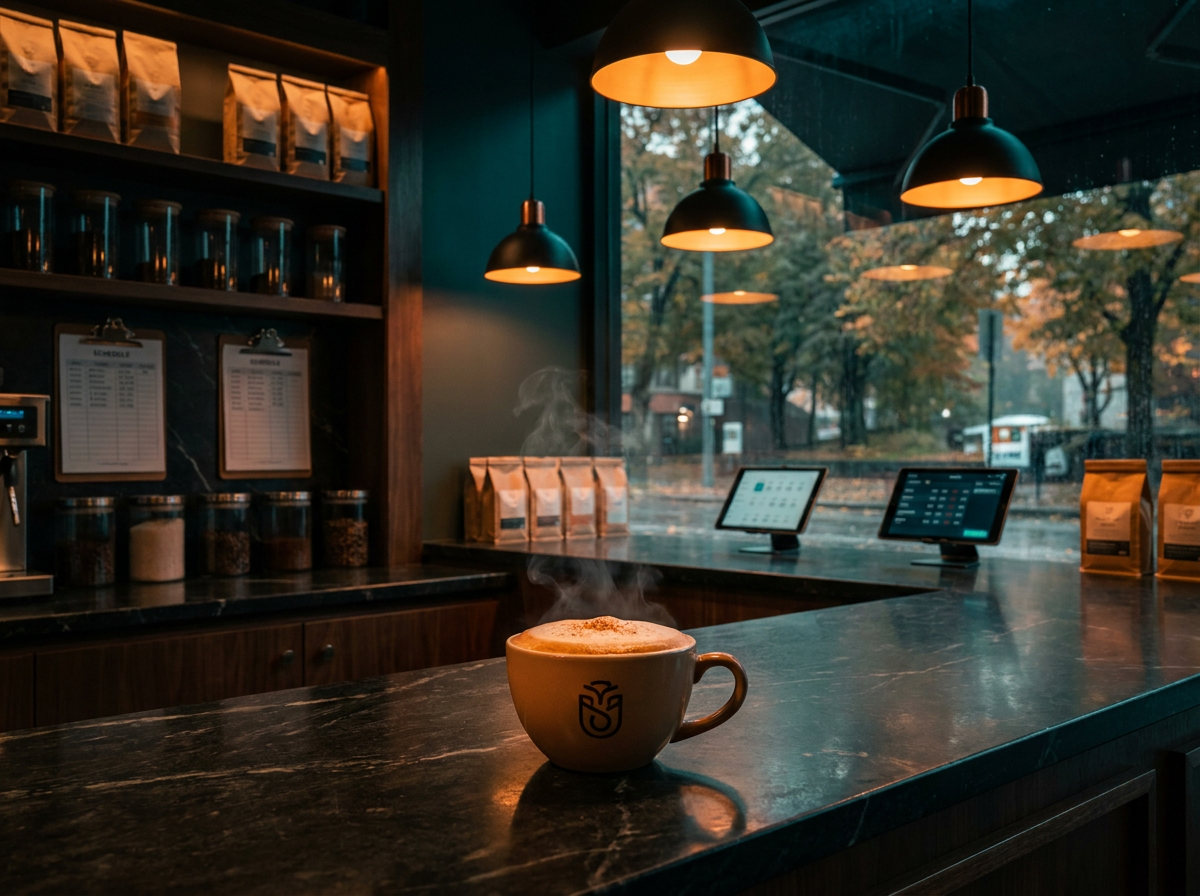
On August 25, 2026, Starbucks will flip a switch.
Across thousands of locations — same day, same product, same experience — the Pumpkin Spice Latte returns. New items join the menu: Chaider (a chai-apple cider hybrid), new pumpkin-forward drinks, banana and pecan options, and updated food offerings. The launch will drive lines, social media trends, and national media coverage without a single extraordinary effort on any individual store's part.
Most people will experience this as a seasonal moment. Operators should experience it as a masterclass.
What Starbucks executes every fall is not a marketing campaign. It's the proof of something most founder-led businesses don't have: a scalable operational system. And the gap between what Starbucks can do and what most growing businesses can't — that gap is structural, not aspirational.
What Actually Makes the PSL Launch Work (It's Not the Drink)
The Pumpkin Spice Latte has been a fixture since 2003. Over two decades, it has become one of the most recognized seasonal products in consumer history — not because of its flavor, but because of what delivers it:
- Supply chain coordination that sources and positions ingredients across global operations months in advance
- Workforce training executed at scale so every barista in every market can execute the same product on the same day
- Documented recipes and standards that produce a consistent cup regardless of location, shift, or employee tenure
- Technology infrastructure that syncs inventory, orders, pricing, and loyalty program updates simultaneously
- Marketing systems that generate cultural anticipation without requiring proportional spend each cycle
None of that happens at launch. It was built, tested, refined, and codified long before August. The launch is the visible output of invisible preparation.
That's the lesson founders miss. They see the buzz and think about the product. They should be thinking about the system.
The Three Operational Principles Behind Starbucks' Seasonal Playbook
Principle 01
Consistency Is the Product
When someone orders a Pumpkin Spice Latte in Miami, they expect the same drink they got in Chicago last October. Not similar. The same.
That level of consistency doesn't happen because individual baristas care deeply. It happens because every step of the process — from ingredient specification to preparation sequence to cup labeling — is documented, trained, and audited. The human element is structured within a system, not left to individual interpretation.
For founder-led businesses, this is the consistency gap. Delivery depends on who's doing it, when, and how much oversight exists. The client experience varies. The output quality fluctuates. What customers receive depends more on circumstances than on process.
You cannot scale inconsistency. You can only expose it at higher volume.
The question for your business: If you doubled your client load tomorrow, would the quality of delivery remain the same — or would it depend on whether you were personally involved?
Principle 02
Innovation Builds on Infrastructure, Not Instead of It
Starbucks does not rebuild its menu from scratch each fall. It introduces new items — the Chaider, new pumpkin beverages, new food — layered on top of existing supply chain relationships, equipment capabilities, barista training frameworks, and quality standards.
The new Chaider didn't require building a new apple sourcing operation from scratch. It required adapting existing infrastructure to a new configuration. That's strategic product development: novelty within a system capable of delivering it.
Most small businesses operate in reverse. They create new offerings without building the infrastructure to support existing ones. The result is fragmented delivery, unclear ownership, and a team that's constantly context-switching between half-built processes.
Innovation without infrastructure isn't growth. It's managed chaos.
The question for your business: When you add a new service or expand into a new market, are you layering onto a solid foundation — or building a new structure before the current one is stable?
Principle 03
Anticipation Is an Asset That Must Be Built, Not Bought
The PSL launch generates national media coverage, social trends, and lines out the door — every year — without Starbucks running a campaign from scratch. Why? Because the product has delivered consistently for over 20 years. The reputation precedes the announcement.
That anticipation is a compounding asset. Each successful launch reinforces the expectation that the next one will deliver. The brand does work the marketing budget doesn't have to.
For founder-led businesses, this is the credibility gap. Trust is built through proof — through consistent delivery, documented outcomes, and clients who receive what was promised on the timeline they were promised it. That track record, accumulated over time, is what makes business development easier, referrals more frequent, and investor conversations more productive.
The question for your business: What do clients and prospects expect before they engage you — and is that expectation built on documented outcomes or on hope?
What This Means for a Founder-Led Business Right Now
Starbucks can execute its fall launch the way it does because it spent decades building the systems that make it possible. The infrastructure came before the scale — not after.
Most founder-led businesses are trying to scale before the infrastructure exists. That gap shows up in predictable places:
- Delivery inconsistency — the experience a client gets depends on who's working the account, not on a documented process
- Founder bottlenecks — decisions, approvals, and client relationships that can only flow through one person
- Unclear ownership — team members who don't know what they're responsible for or what “done” looks like
- No capacity model — no clear sense of what additional volume does to margins, timelines, and quality
- Undocumented processes — operational knowledge that lives in heads rather than systems
These aren't culture problems or talent problems. They're structural problems. And structure is fixable — but only if you diagnose it honestly before you try to grow through it.
The Operational Readiness Question
The PSL doesn't launch in chaos. It launches into a system built for it.
Before Starbucks introduces a new product, it asks: Does our infrastructure support this? Can we deliver this consistently at scale? What breaks if we add this to the menu without fixing that first?
That's the same set of questions every founder should be asking before they raise capital, pursue expansion, or take on a significant new client.
What's working in your operation? What's exposed? What breaks when volume doubles? Who owns what — and can they own it without you?
Those aren't philosophical questions. They're diagnostic ones. And the answers determine whether growth accelerates your business or accelerates the problems inside it.
Frequently Asked Questions
What business lessons can founders take from Starbucks' seasonal launch strategy?
Starbucks' PSL launch succeeds because of documented processes, supply chain infrastructure, trained teams, and consistent delivery — not because of the drink itself. The lesson for founders: scale requires systems built before the volume arrives, not after. Consistency is a structural outcome, not a cultural one.
What does “scalable operations” mean for a small business?
Scalable operations means your business can handle more volume — more clients, more revenue, more team members — without a proportional increase in errors, chaos, or founder involvement. It requires documented processes, clear ownership, consistent delivery standards, and the capacity to replicate quality without personally overseeing every output.
Why do founder-led businesses struggle to scale even with strong revenue?
Most founder-led businesses scale revenue before they scale infrastructure. The delivery process, decision-making, and client relationships remain dependent on the founder — which creates a ceiling. When volume increases, quality decreases, timelines slip, and the founder becomes the bottleneck. The fix is structural, not operational band-aids.
What is operational readiness and why does it matter for growth?
Operational readiness means your business is structurally prepared to handle growth — whether that's expansion, new funding, acquisition, or simply more clients. It requires clear ownership, documented processes, financial visibility, compliance structure, and delivery consistency. Without it, growth amplifies existing weaknesses rather than building on strengths.
How does consistent delivery build business credibility?
Consistent delivery — producing the promised outcome, on time, at the expected quality level — builds the trust that makes every subsequent business development effort easier. It reduces sales cycle length, increases referrals, and creates the track record that investors and acquirers evaluate. It is a compounding asset, not just a service standard.
The Bottom Line
Every August, millions of people wait for a coffee drink to come back.
That's not a product phenomenon. That's the result of two decades of operational excellence, consistent delivery, and a system built to perform at scale.
Your business doesn't need to be Starbucks. But it does need to answer the same questions: Can we deliver this consistently? Does our infrastructure support what we're promising? What breaks at scale?
If you can't answer those questions with documentation and data — not intuition — you're not ready to grow. You're ready to get busy.
Want to know what your operations look like before you scale into them?
Lumena Global Advisory conducts operational readiness diagnostics for founder-led businesses. We identify what's working, what's exposed, and what to fix first — before expansion, funding, or your next stage of growth exposes it for you.
Book a Strategy Call →Lumena Global Advisory is a WBENC-certified operational advisory firm. We embed inside founder-led businesses to diagnose structural risk and build the systems that capital and scale require.